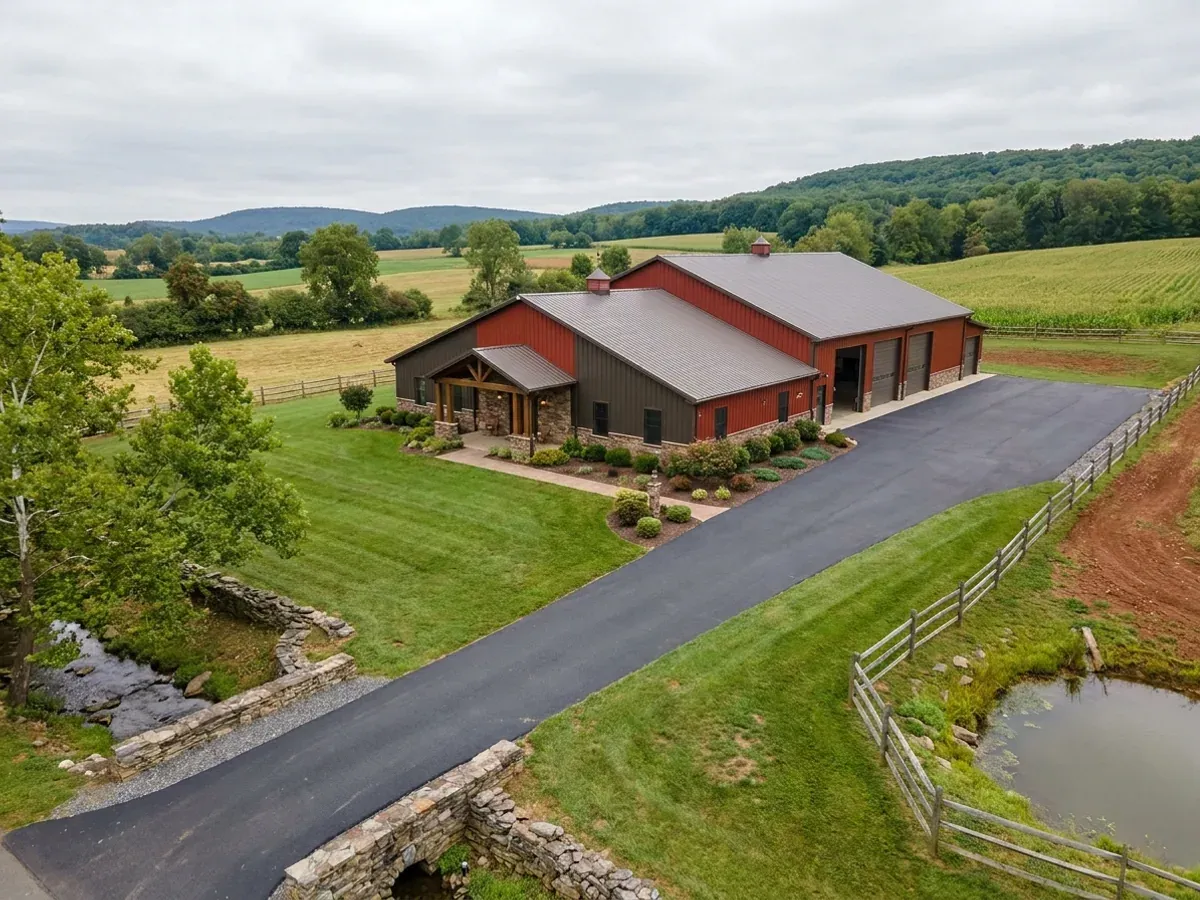
Turnkey Barndominiums in New Jersey
A turnkey barndominium in New Jersey is one contract from raw land to the certificate of occupancy. That matters more here than almost anywhere, because a new house on its own land usually answers to several offices at once: the municipal construction office for the building, the local board of health for the septic system, the Department of Environmental Protection for any flood hazard, wetlands or coastal permit, and the Pinelands Commission or the Highlands rules where the land sits in either region. We run that sequence, the site work, the frame and the finishes as one job.
Turnkey Builds: how the work runs
Four stages, in this order. The sequence matters more than it looks: settling the zoning, the septic soil tests and any Pinelands, Highlands, coastal or flood review before anything is fabricated is what keeps a New Jersey build from stalling.
Land and approvals check
Before anything is drawn we confirm what the lot allows: municipal zoning, the soil and septic picture, the water supply, and whether the parcel is in the Pinelands, the Highlands, the coastal zone or a flood hazard area. That tells us which approvals come first and roughly how long they take.
Plans, septic and permits
The permit set is sealed by a New Jersey-licensed architect or professional engineer, the septic system is designed and sealed by a New Jersey licensed professional engineer and permitted by the board of health, and a well, if needed, is drilled under a well permit by a licensed well driller. The construction permit follows.
Site work, frame and envelope
Clearing, grading, the driveway and the foundation go in, then the steel or post frame, roof and wall panels, windows and doors. The construction office inspects the footings, frame and each stage the permit lists.
Finishes and the certificate of occupancy
Insulation, interior framing, drywall, kitchen, baths and flooring follow, with licensed trade contractors doing the plumbing, electrical and HVAC. After final inspections the construction office issues the certificate of occupancy, and the house can be lived in.
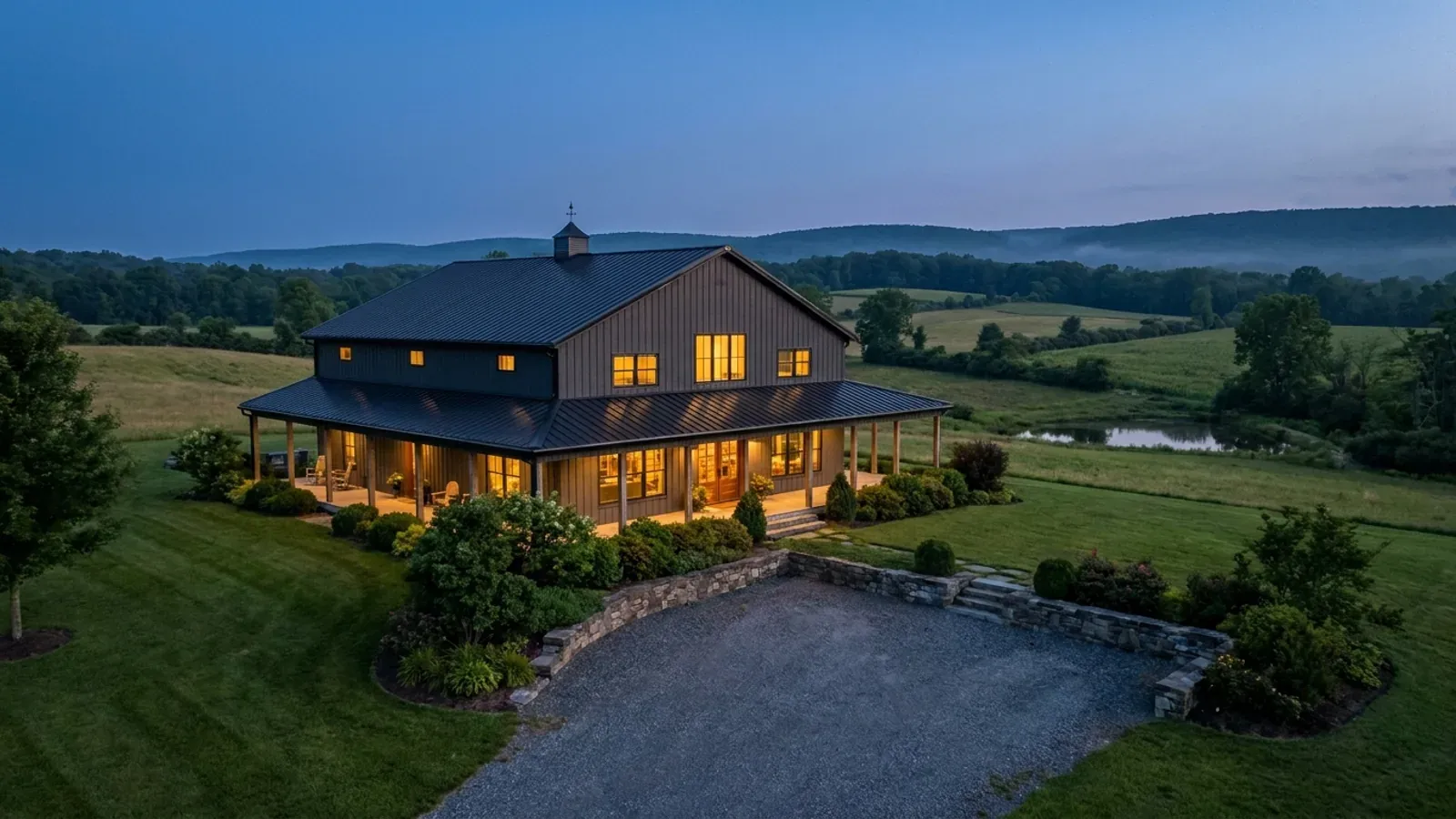
A New Jersey build is decided by the order the approvals come in
Every New Jersey municipality enforces the same statewide construction code through its construction office, or through the Department of Community Affairs where a town has asked the state to take that on. The septic system is approved separately by the board of health, and land in the Pinelands, the Highlands, the coastal zone or a flood hazard area can need regional or state approval before the town will issue a permit. Turnkey means one party keeps all of those moving in the right order.
Where we deliver turnkey builds
In New Jersey the line that matters is the municipal boundary. The construction code is the same everywhere, but each municipality has its own zoning and its own construction office, or shares one, or uses the Department of Community Affairs as its enforcing agency. Counties issue no building permits. Cross a town line and what changes is who reviews the drawings, how the land is zoned and which board of health approves the septic system; cross into the Pinelands, the Highlands or the coastal zone and a regional or state review can come first.
Barndominium builders across New Jersey.
Every town and county we build in has its own answer on zoning, septic and regional overlays. The service area pages set out what each one publishes.
What actually decides the price
Square footage is the number everyone leads with, and it is rarely the one that moves a barndominium budget. These four do.
-
Where the land is
A lot with public water and sewer skips the well and septic. A rural lot needs both, and a lot in a regulated area adds permit and professional fees before building starts.
-
Septic system type
The soil tests decide the system. A conventional system costs less than an alternative or advanced treatment system, which some soils and some regions require.
-
Size and finish level
Square footage matters, but kitchens, baths, flooring, windows and mechanical systems move a turnkey price more than the frame does.
-
Schedule and season
Approvals that run in sequence, winter weather for the foundation, and the time between inspections all affect cost as well as the move-in date.
Turnkey Builds in New Jersey: common questions
8 questions we get asked most often about building in New Jersey. If yours is not on the list, ask it directly.
What does turnkey include?
Who issues the permit for a new barndominium in New Jersey?
Who approves the septic system?
Can I build in the Pinelands?
What about the Highlands?
How long does a turnkey build take?
Do you find land?
Can I do some of the work myself?
Sources
- Bureau of State and Local Code Inspections — New Jersey Department of Community Affairs
- N.J.A.C. 7:9A-2.1, definitions (individual subsurface sewage disposal systems) — Legal Information Institute
- N.J.A.C. 7:9A-3.5, permit to construct or alter a septic system — Legal Information Institute
- Comprehensive Management Plan summary — New Jersey Pinelands Commission
- The New Jersey Highlands Region — Highlands Water Protection and Planning Council
- N.J.A.C. 7:9D-1.5, well permits and licensed well drillers (definitions) — Legal Information Institute
- N.J.A.C. 5:23-2, construction permits and sealed plans — New Jersey Department of Community Affairs
Keep reading
The pages that answer the next question this one raises.
How Long Does It Take?
Where the time goes, from the land check and approvals to move-in.
Read itHow to Finance a Barndominium
A single contract is also the structure lenders are most comfortable underwriting.
Read itBarndominiums for Sale in New Jersey
Why finished barndominiums rarely come up for sale here, and why building is usually the route.
Read itReady to put turnkey builds against a real plan? Start there and the rest follows.
Tell us about the land
Tell us where the parcel is and what you want on it, and we will come back with who has jurisdiction, what the land needs before it can be built on, and a realistic budget range. Starting the survey costs nothing.