Barndominium Site Preparation in New Jersey
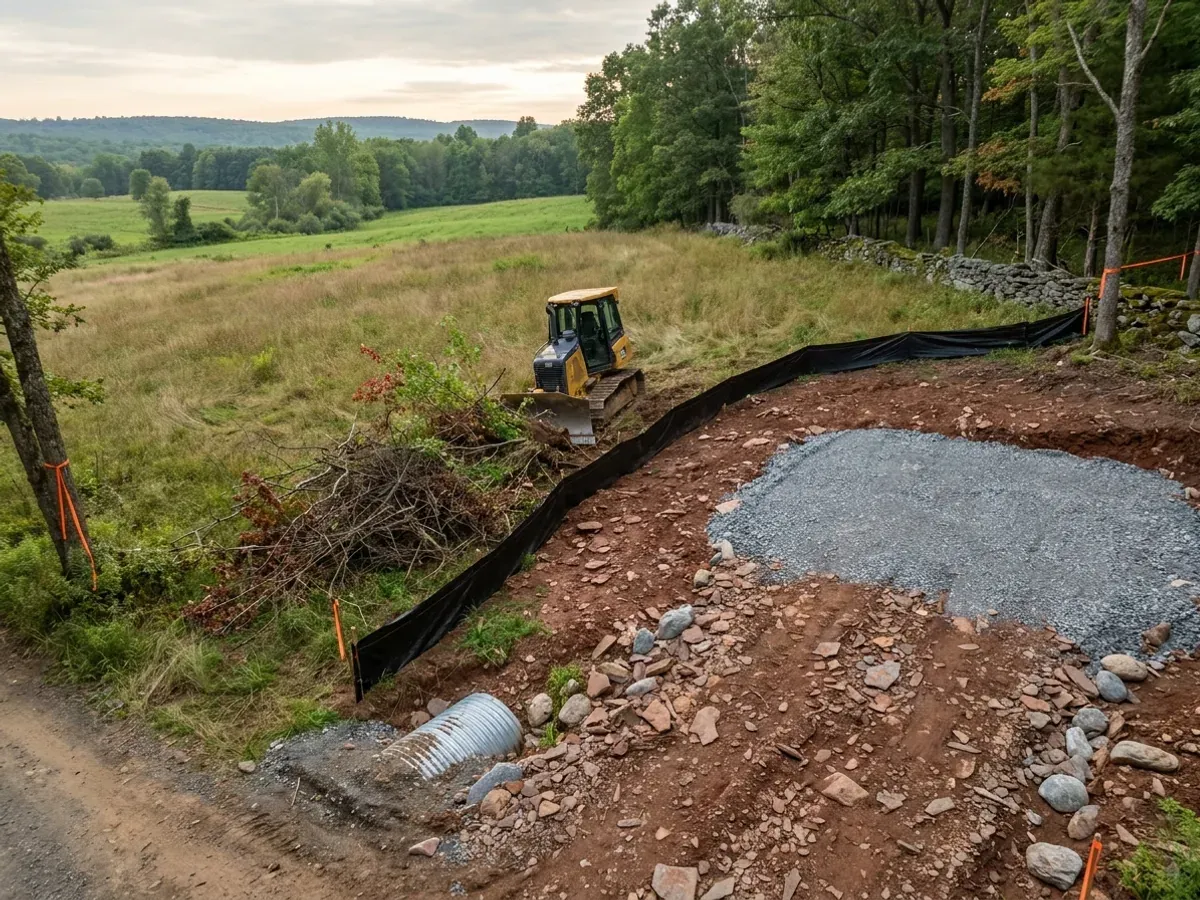
Site preparation is the first phase of building a new barndominium on its own land: clearing, grading, drainage, the drive and the building pad, done so the foundation, the septic system and the well all land where the approvals say they will. On New Jersey land the order matters, because the septic soil tests fix where the system and its reserve area go, and wetlands, flood hazard areas and, in the Pinelands, limits on clearing can fix how much of the lot may be disturbed at all.
Site Preparation: how the work runs
Four stages, in this order. The sequence matters more than it looks: settling the zoning, the septic soil tests and any Pinelands, Highlands, coastal or flood review before anything is fabricated is what keeps a New Jersey build from stalling.
Read the ground
We start from the survey, the USDA soil survey for the parcel and the septic soil logs and permeability tests. Sandy, fast-draining ground in the Pine Barrens, heavy wet soils elsewhere and a high seasonal water table each change the pad, the drainage and the foundation.
Lay out around the septic and the lines
The septic field and its reserve area, the well and its separation distances, wetland and flood hazard lines and the zoning setbacks are staked before any machine moves. The septic area is fenced off so it is not compacted by trucks.
Clear, grade and drain
Clearing is kept to what the approvals allow, which in the Pinelands is itself regulated above 1,500 square feet. We grade to move water away from the house and off the septic area, and a retaining wall four feet or taller goes on the construction permit.
Drive, pad and utilities
The construction drive goes in first so delivery trucks and concrete can reach the pad. The building pad is compacted for the foundation below the state frost depth for your county, and trenches for power and water are routed to the house.
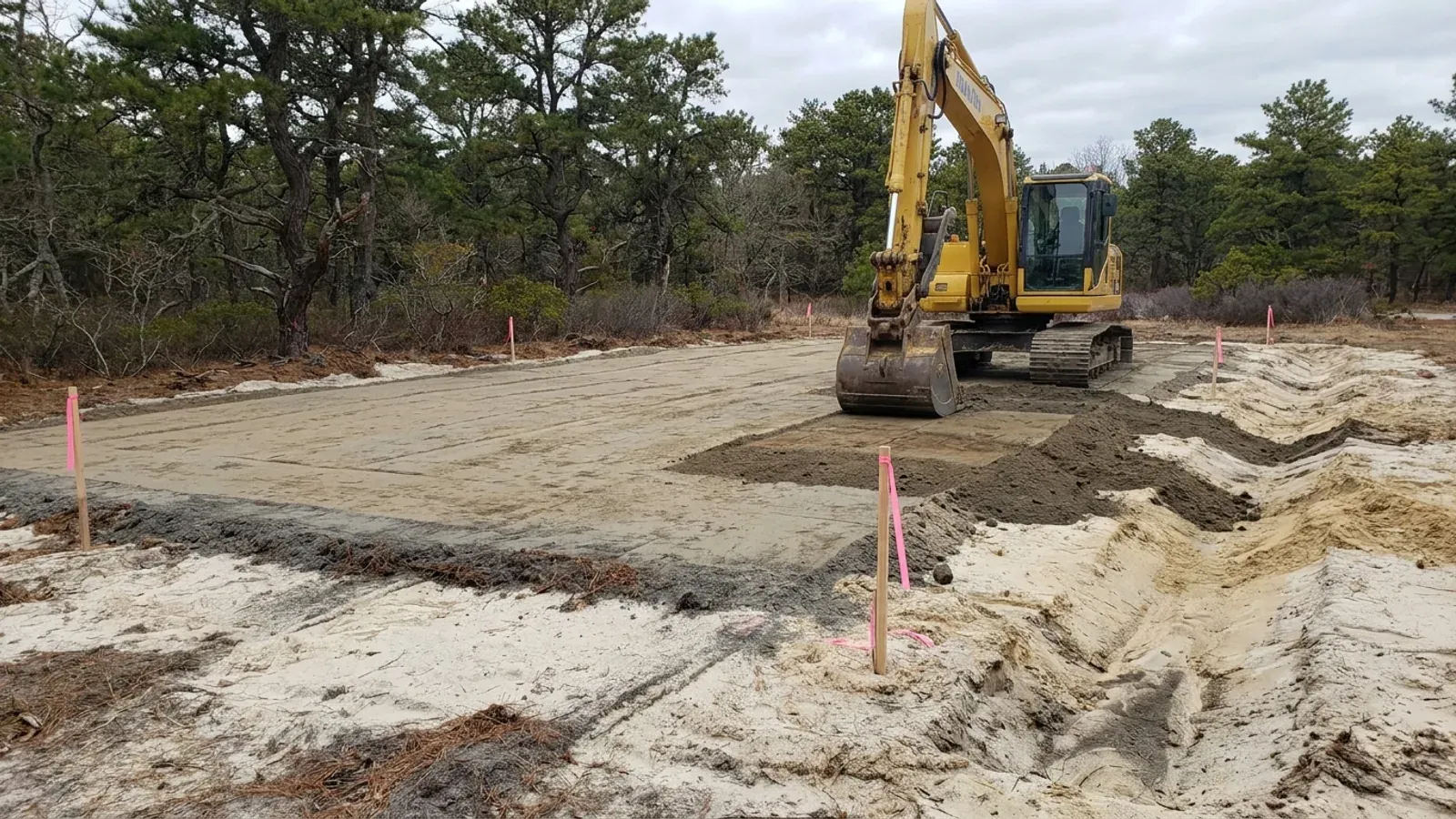
On New Jersey land, the septic area and the water table decide where the house can go
A septic permit application in New Jersey has to show every well, building, flood hazard area, riparian zone and state-approved wetland line within 150 feet of the system, along with the soil tests. In the Pinelands, construction is generally prohibited where the ground water rises within five feet of the surface in the wettest part of the year. That is why the site plan for a barndominium is really drawn around the ground and its water, and the house fits into what is left.
Where we deliver site preparation
In New Jersey the line that matters is the municipal boundary. The construction code is the same everywhere, but each municipality has its own zoning and its own construction office, or shares one, or uses the Department of Community Affairs as its enforcing agency. Counties issue no building permits. Cross a town line and what changes is who reviews the drawings, how the land is zoned and which board of health approves the septic system; cross into the Pinelands, the Highlands or the coastal zone and a regional or state review can come first.
Barndominium builders across New Jersey.
Every town and county we build in has its own answer on zoning, septic and regional overlays. The service area pages set out what each one publishes.
What actually decides the price
Square footage is the number everyone leads with, and it is rarely the one that moves a barndominium budget. These four do.
-
Clearing and tree removal
A wooded lot costs more to clear than open farmland, and in regulated areas clearing may be limited to the approved footprint.
-
Slope and fill
A sloping lot needs cut, fill or a walkout foundation, and walls four feet or taller need a construction permit.
-
Water on and under the site
A high water table or poor drainage can call for fill, a raised foundation or drainage work before the pad is ready.
-
Access and drive length
A long drive, a narrow frontage or a soft road shoulder adds material and time before the first delivery can arrive.
Site Preparation in New Jersey: common questions
8 questions we get asked most often about building in New Jersey. If yours is not on the list, ask it directly.
What does site preparation include?
Do you do site work on lots that already have a house?
Does the septic system affect where I can build?
Can I clear my whole lot?
Is my land in a flood hazard area?
Does the coastal zone change site work?
What kind of soil will I be building on?
Do you install the septic system or drill the well?
Sources
- N.J.A.C. 7:9A-3.5, permit to construct or alter a septic system — Legal Information Institute
- Comprehensive Management Plan summary — New Jersey Pinelands Commission
- Web Soil Survey — USDA Natural Resources Conservation Service
- N.J.A.C. 7:13-2.1, when a flood hazard area permit is required — Legal Information Institute
- N.J.A.C. 7:7-2.2, when a CAFRA permit is required — Legal Information Institute
- N.J.A.C. 5:23-2, construction permits and sealed plans — New Jersey Department of Community Affairs
- New Jersey Climate Overview — Office of the New Jersey State Climatologist, Rutgers University
Keep reading
The pages that answer the next question this one raises.
Ready to put site preparation against a real plan? Start there and the rest follows.
Tell us about the land
Tell us where the parcel is and what you want on it, and we will come back with who has jurisdiction, what the land needs before it can be built on, and a realistic budget range. Starting the survey costs nothing.